
 Customer Service
Pre-sales SILL Agent 6 Xiaoxiao
ID 109501
 +86 574-6319 6918
 manager@sillbearing.com
 Building 32, Zone B, Wanyang Mass Creation City, Henghe Town, Cixi, Ningbo, China.
ID 109501
ID 109503
ID 109505
Date:
Bearings of various types feature different characteristics due to their distinct designs. Given the variability and complexity of mounting positions and application scenarios, there is no fixed rule for bearing type selection. When selecting a bearing type to match the specific mounting position and operating conditions of a host machine, it is recommended to take the following key factors into comprehensive consideration.
Allowable Space.
In mechanical design, the shaft size is generally determined first, and then the bearing is selected according to the shaft dimension. Typically, ball bearings are used for small shafts; cylindrical roller bearings, spherical roller bearings and tapered roller bearings (ball bearings may also be selected in some cases) are adopted for large shafts.
If the radial space at the bearing mounting position is limited, bearings with a small radial section height should be chosen, such as needle roller bearings, certain series of deep groove ball bearings, angular contact ball bearings, cylindrical roller bearings, spherical roller bearings and thin-section bearings.
If the axial space at the bearing mounting position is restricted, bearings with a narrow width can be used.
Load
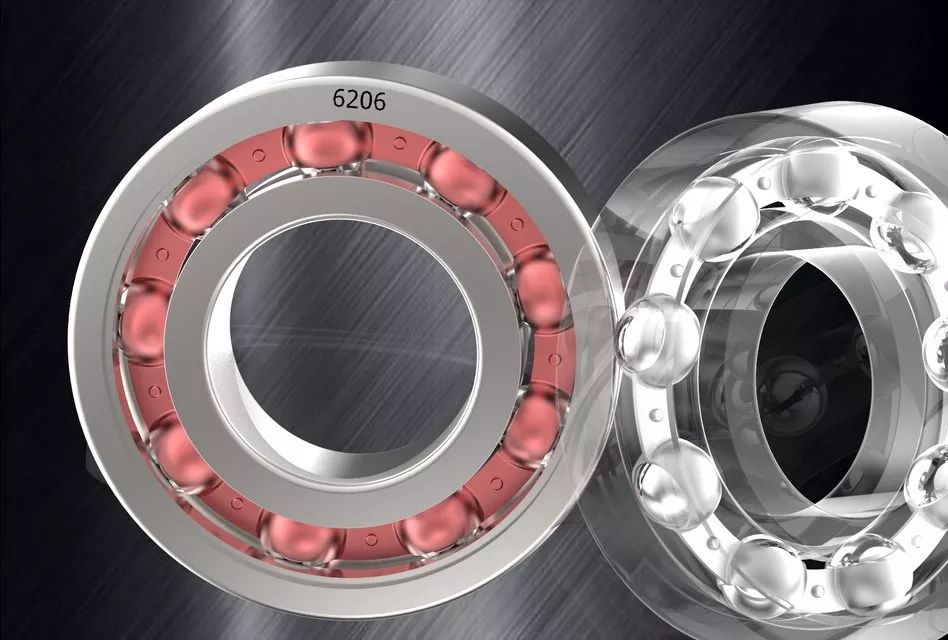
The magnitude of load is usually the decisive factor for selecting bearing size. Roller bearings have a higher load-carrying capacity than ball bearings with the same overall dimensions. Generally, ball bearings are suitable for light or medium loads, while roller bearings are designed for heavy loads.
In terms of load type: deep groove ball bearings or cylindrical roller bearings can be selected for pure radial loads; thrust ball bearings or thrust cylindrical roller bearings for pure axial loads. For combined loads (both radial and axial loads), angular contact ball bearings or tapered roller bearings are commonly used.
When the radial load is relatively large and the axial load is small, deep groove ball bearings and cylindrical roller bearings with ribs on both inner and outer rings are acceptable. If significant shaft or housing deformation and poor alignment occur together, self-aligning ball bearings or spherical roller bearings are recommended.
For conditions with large axial load and small radial load, thrust angular contact ball bearings or four-point contact ball bearings can be adopted. If self-aligning capability is also required, thrust spherical roller bearings should be chosen.
Rotational Accuracy
For most machinery, bearings of tolerance class P0 are sufficient to meet the requirements of the host equipment. However, where strict rotational accuracy of the shaft is required, such as machine tool spindles, precision machinery and instruments, deep groove ball bearings, angular contact ball bearings, tapered roller bearings, cylindrical roller bearings and thrust angular contact ball bearings of higher tolerance grades shall be selected.
Rigidity
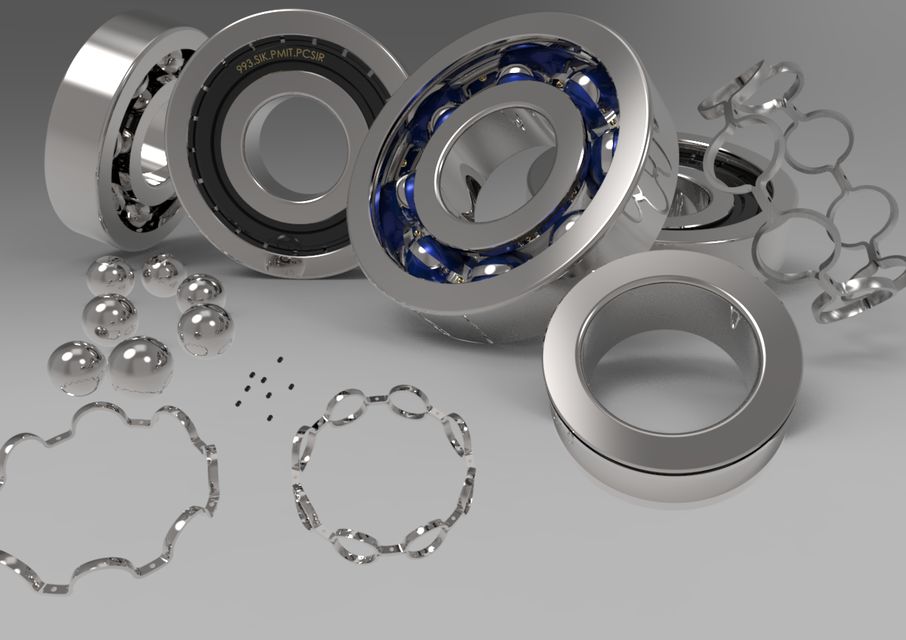
The rigidity of a rolling bearing is determined by the amount of elastic deformation under load. Normally, such deformation is tiny and can be neglected. Nevertheless, for certain machinery such as machine tool spindle systems, the static and dynamic stiffness of bearings exert a significant influence on system performance. Generally speaking, roller bearings offer higher rigidity than ball bearings. Proper preloading of various bearing types can also improve rigidity to varying degrees.
Vibration and Noise
Bearings themselves normally generate low noise and vibration. However, low-noise bearings are usually selected for equipment with special requirements for quiet operation and smooth running, such as small and medium-sized motors, office machinery, home appliances and instruments.
Axial Displacement
The most common bearing arrangement is to mount one “locating bearing” for axial positioning at one end of the shaft and one “floating bearing” capable of axial movement at the other end. This prevents seizure caused by thermal expansion and contraction of the shaft. The commonly used floating bearings are cylindrical roller bearings without ribs on the inner or outer ring. In this case, an interference fit can be adopted between the inner ring and the shaft, or between the outer ring and the housing bore. Non-separable deep groove ball bearings or spherical roller bearings may also be used as floating bearings sometimes. A clearance fit shall be selected between the inner ring and shaft or between the outer ring and housing bore during installation, to ensure sufficient freedom for axial movement of the inner or outer ring.
Friction Torque
Ball bearings have lower friction resistance than roller bearings. Under pure radial load, radial contact bearings show low friction resistance; under pure axial load, axial contact bearings have low friction resistance. Under combined loads, angular contact bearings with a contact angle close to the load angle deliver the minimum friction resistance.
Ball bearings or cylindrical roller bearings are suitable for instruments and machinery requiring low friction torque. In addition, contact seals should be avoided for low-friction-torque bearings. Drip feed lubrication, oil-air lubrication or other friction-reducing lubrication methods are recommended.
Installation and Dismounting
For machinery requiring frequent installation and dismounting of bearings with a cylindrical bore, separable angular contact ball bearings, tapered roller bearings, separable cylindrical roller bearings, needle roller bearings and thrust bearings are preferred.
Bearings with a tapered bore can be fitted onto a shaft journal, or mounted on a cylindrical shaft journal with an adapter sleeve or withdrawal sleeve for easier installation and removal.
(Source: Mechanical Xueba)
Fill in the form below and submit. We will receive your email and reply soon.
Enter the code shown in the image to send your email.