Principle and Application Range of Deep Groove Ball Bearings
Date:
Structure Composition
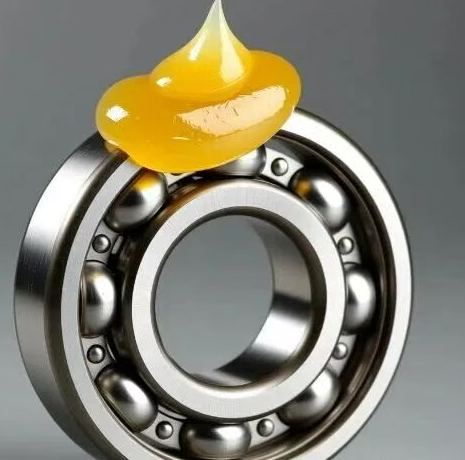
A deep groove ball bearing consists of two opposing ring-shaped components: an inner ring (mounted on the shaft) and an outer ring (mounted in the bearing housing or casing), together with a number of steel balls and a cage. Both the inner and outer rings feature continuous deep grooves with a semicircular cross-section. These grooves match the steel balls and form raceways.
Load Bearing
When the bearing is installed and running, the steel balls roll between the raceways of the inner and outer rings. This bearing type is mainly designed to carry radial loads, namely loads perpendicular to the bearing axis. Meanwhile, due to the contact angle formed between the steel balls and raceways, it can also bear light axial loads (loads parallel to the axis) under certain conditions. Especially when the bearing has a large internal radial clearance, it can behave like an angular contact ball bearing and achieve higher axial load capacity.
Friction Reduction
By converting sliding friction into rolling friction, deep groove ball bearings greatly cut down running friction resistance. This improves mechanical efficiency, reduces energy loss and permits higher rotating speeds.
Functions of the Cage
The cage is fitted inside the bearing to evenly space the steel balls and guide them to roll freely along the correct path. It prevents collision and friction between steel balls, further stabilizing bearing operation and lowering running noise.
Bidirectional Positioning
Within a proper range of axial clearance, deep groove ball bearings can restrict axial displacement of the shaft or housing in both directions to realize bidirectional axial positioning.
Self-aligning Capability
Deep groove ball bearings allow a certain degree of misalignment (8′~16′) between the shaft and housing bore. They can operate normally under asymmetric loads, yet excessive misalignment will shorten bearing service life.
Working Principle
During operation, the steel balls roll inside the deep grooves of the inner and outer raceways to effectively reduce friction. The bearing can take loads from two directions: radial loads and light axial loads. When the radial clearance is increased, it can bear relatively large bidirectional axial loads.
In summary, deep groove ball bearings adopt rolling elements and optimized design to deliver efficient and stable rotary support, offering good durability and reliability under various working conditions.
Application Fields
Thanks to their simple structure, easy maintenance, high speed capability and low noise, deep groove ball bearings are widely used in a great variety of machinery:
Automotive industry: engines, transmission assemblies, steering systems, etc.
Home appliances: electric motors, fans, air conditioning compressors, etc.
Machine tools: spindles, guide rails, transmission components, etc.
Industrial equipment including agricultural machinery, water pumps, textile machinery and plastic machinery
Electromechanical equipment in power stations, mining and metallurgical rolling lines
Precision instruments, printing & packaging machinery, food processing machinery and other applications mainly subject to radial loads
Owing to their versatile performance and cost-effective production, deep groove ball bearings occupy a vital position in the bearing industry and account for a large share of total bearing output.
Send Email
Fill in the form below and submit. We will receive your email and reply soon.
Email Send Confirmation
Enter the code shown in the image to send your email.

 Customer Service
 +86 574-6319 6918
 manager@sillbearing.com
 Building 32, Zone B, Wanyang Mass Creation City, Henghe Town, Cixi, Ningbo, China.