
 Customer Service
Pre-sales SILL Agent 6 Xiaoxiao
ID 109501
 +86 574-6319 6918
 manager@sillbearing.com
 Building 32, Zone B, Wanyang Mass Creation City, Henghe Town, Cixi, Ningbo, China.
ID 109501
ID 109503
ID 109505
Date:
Deep groove ball bearings are an essential component of industrial automation and play a critical role in many mechanical systems. They can be found in countless applications, delivering smooth and reliable equipment operation. This article introduces the structure, materials and diverse applications of deep groove ball bearings, as well as how to select the right bearing product.
A deep groove ball bearing is a widely used rolling bearing. It features low friction resistance and a high limiting speed. It can bear radial loads or combined radial and axial loads, and may also be used to support axial loads on mechanical components.
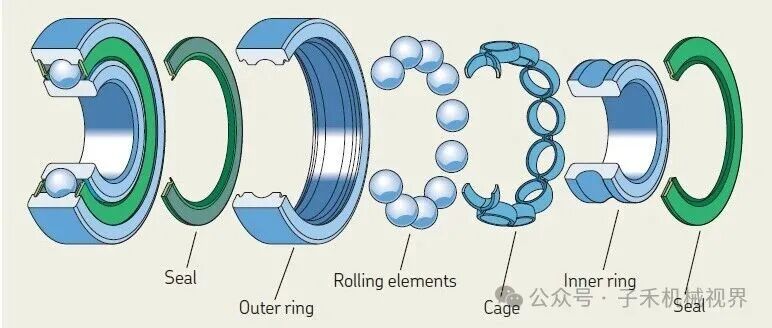
When a deep groove ball bearing is subjected to radial load only, its contact angle is zero. Deep groove ball bearings with large radial internal clearance can withstand relatively large axial loads.
Deep groove ball bearings have an extremely low friction coefficient and a high limiting speed, making them suitable for high-speed or even ultra-high-speed operation. They are highly durable and do not require frequent maintenance. Deep groove ball bearings are commonly used in small-power motors, automotive and tractor gearboxes, machine tool gearboxes, as well as general machinery and tools.
There are various types of deep groove ball bearings, mainly including the following:
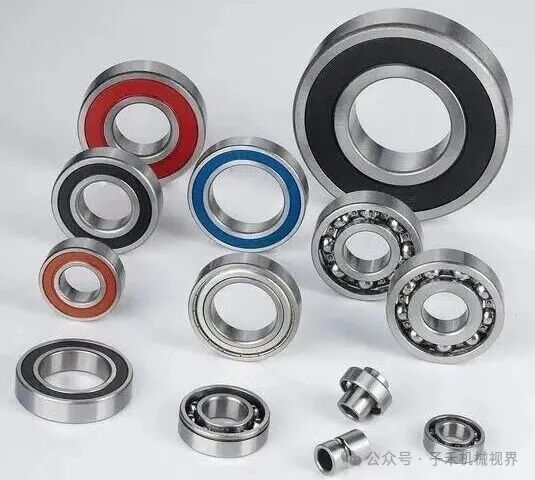
This type of bearing mainly carries radial loads and can also withstand light axial loads. Its axial displacement is limited within the axial clearance range, and the inner ring can tilt relative to the outer ring.
They include single-shielded and double-shielded bearings. There is a gap between the shield and the edge of the inner ring cage. They share the same limiting speed as open deep groove ball bearings, yet deliver better dust protection.
They include single-sided sealed and double-sided sealed bearings. The seal and the edge of the inner ring cage adopt either contact or non-contact structure. Contact seals provide superior sealing performance but come with higher friction resistance and a lower speed limit.
After a snap ring is fitted, this bearing type simplifies axial positioning of the bearing inside the housing bore.
Chromium Steel: One of the most widely used materials for deep groove ball bearings. It offers excellent wear resistance and heat resistance, suitable for high-speed and high-load mechanical equipment.
Stainless Steel: Stainless steel features outstanding corrosion resistance and heat resistance. It is commonly used for machinery in food and medical industries, especially in humid and corrosive environments. (The current project operates in a freezing, low-temperature and humid environment, so full stainless steel construction is required to pass the 96-hour salt spray test.)
High-carbon Chromium-molybdenum Steel: This high-strength alloy steel has high strength and good toughness. It is suitable for bearings in high-load and high-speed machinery, such as bearing components for automotive and aerospace applications.
Ceramics: Ceramic materials including alumina ceramic and silicon nitride ceramic feature high strength, high hardness and low friction coefficient, making them suitable for high-speed, high-temperature and high-precision applications.
Plastics: Plastic bearings made of PEEK, PI and other engineering plastics are used in applications with special weight and cost requirements.
Carbon Steel and Bearing Steel: Carbon steel and bearing steel (such as GCr15 or AISI 52100) are widely used to manufacture raceways and balls of deep groove ball bearings. These materials are heat-treated (the specific heat treatment process is still under research) and have excellent strength and wear resistance for high-load and high-speed working conditions.
Stainless Steel: Stainless steel provides excellent corrosion resistance for humid or chemically aggressive environments. Stainless steel deep groove ball bearings can extend service life and reduce maintenance requirements.
Plastics and Ceramics: Plastic and ceramic materials such as alumina ceramic and silicon nitride ceramic have high strength, high hardness and low friction coefficient for high-speed, high-temperature and high-precision scenarios. Plastics are generally for light-duty applications, while ceramics are selected for extreme environments.
Bearing precision refers to the magnitude of machining errors during bearing production. It is a key indicator for evaluating bearing performance and reflects the accuracy of the bearing in geometric shape, dimensions, rotational precision and other aspects. Under ISO standards, bearing precision is divided into a grade system and a tolerance system.
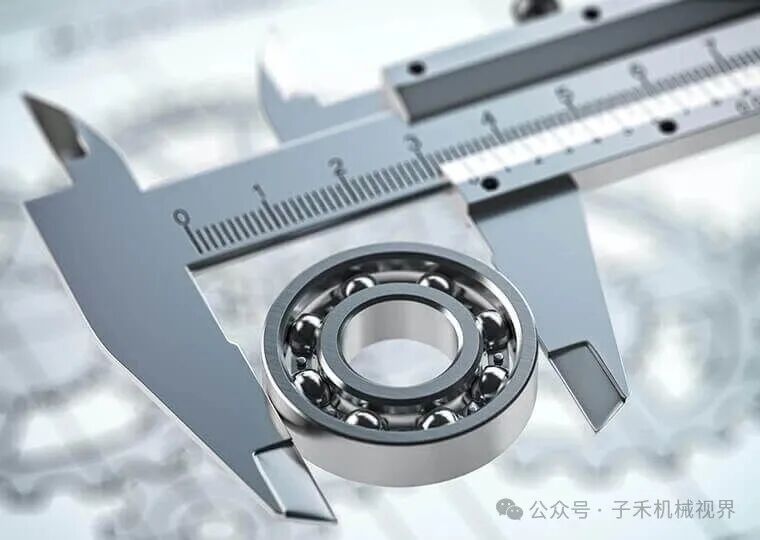
Bearing tolerance refers to the allowable deviation range between the manufactured bearing dimensions and the designed dimensions. It permits variations in the bearing’s size, form and position within a certain range. The magnitude of tolerance directly affects the bearing’s rotational accuracy, load capacity and service life.
ISO precision grades (P0, P6, P5, P4, P2) are classification standards for bearings and other rotating mechanical components established by the International Organization for Standardization. The precision grades indicate the accuracy of bearings in geometric form, dimensions, rotational precision and so on, listed in descending order of precision: P0, P6, P5, P4, P2.
The ABEC rating system is a set of standards developed by the Annular Bearing Engineering Committee (ABEC), affiliated with the American Bearing Manufacturers Association (ABMA), to evaluate bearing tolerance grades. This system mainly applies to precision bearings and uses numbers from 1 to 9 to distinguish precision levels; a higher number means higher bearing precision.
Both the ISO and ABEC systems are valid standards for assessing bearing precision. Nevertheless, they differ in issuing organization, scope of application, grade classification and numbering rules. Precision grades in the ISO system are generally marked with the prefix P, such as P0, P6, P5, P4 and P2. The smaller the number, the tighter the tolerance range and the higher the precision. The ABEC rating system uses numerical designations for precision grades; the larger the number, the tighter the tolerance range and the higher the precision. This is opposite to the numbering logic of the ISO system.
Operating Precision: Operating precision means the stability and accuracy of a bearing during rotation. It is affected by both precision and tolerance. Bearings with high precision and tight tolerances deliver superior operating precision.
Noise and Vibration Level: High-precision bearings generally produce lower noise and slighter vibration during operation. Excessive tolerance will reduce the fit accuracy between rolling elements, inner and outer rings and other components, which tends to cause uneven clearance and shock vibration, resulting in increased noise.
Heat Generation: High-precision bearings usually require tight tolerance ranges to guarantee stable performance. Overly tight tolerances will raise manufacturing difficulty and cost, or create excessive assembly stress that accelerates bearing wear and failure. Therefore, bearing performance, cost, service life and other factors must be balanced comprehensively when selecting precision and tolerance.
Service Life: High-precision bearings with appropriate tolerance ranges can extend service life.
Featuring simple structure, high speed capability and low friction coefficient, deep groove ball bearings can bear radial loads or combined radial and axial loads. For combined-load working conditions in the industrial sector, they are widely used in the automotive and power industries.
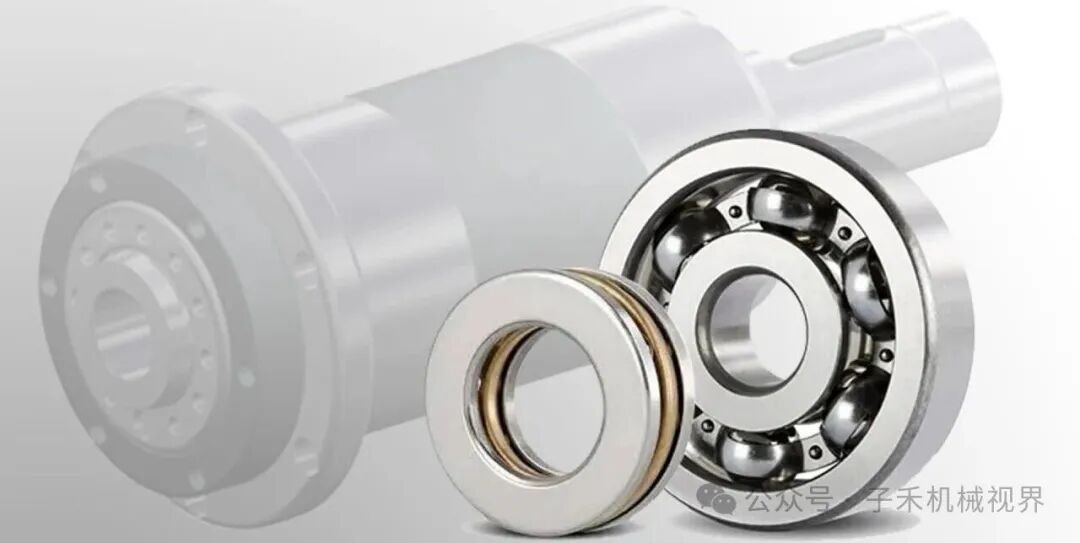
In electric motors and generators, deep groove ball bearings not only support rotating components, reduce friction loss and withstand heavy loads, but also offer advantages such as high precision, high temperature resistance, high-speed performance, and easy installation and maintenance. These benefits make them one of the indispensable key components in motors and generators.
As critical parts for heavy machinery, deep groove ball bearings support rotating components, reduce friction and wear, carry heavy loads at high speeds, improve machine accuracy and reliability, and adapt to harsh operating environments.
Space Constraints: The mounting space for deep groove ball bearings is limited. Size selection is generally determined by mechanical design and design constraints. The main dimension tables for bearings are compiled based on internationally standardized bore sizes, so special attention should be paid to size matching and selection in practical applications.
Speed and Lubrication: The achievable speed of a deep groove ball bearing depends on many factors, including bearing type, dimensions, precision grade, cage type, load, lubrication method and cooling method. The choice of lubrication method has a significant impact on bearing speed and service life. Generally, deep groove ball bearings are suitable for high-speed operation.
Dimensional Tolerance and Rotational Accuracy: The dimensional accuracy and rotational accuracy of deep groove ball bearings comply with ISO and JIS standards. Bearings of class P5 or higher precision are recommended for machinery requiring high precision and high-speed operation.
Axial Load: Deep groove ball bearings have certain limitations when bearing axial loads. Normally, they can carry a certain amount of axial load while under radial load. However, excessive axial load may shorten the bearing service life.
Bearing installation shall be determined according to the bearing structure, dimensions and properties of mating components. Force must be applied directly to the end face of the ring with an interference fit; pressure shall never be transmitted through the rolling elements. The main installation methods include press fitting, hot mounting and cold mounting. Keep the working area clean during installation, avoid forced fitting, and use proper tools.
Cold Press Mounting: Cold press mounting of deep groove ball bearings means cooling the bearing or mating parts before installation under pressure. This method is suitable for small and medium-sized deep groove ball bearings. It can ease installation when the fit between the bearing and shaft/housing is tight. The cooling temperature and duration must be strictly controlled to prevent unnecessary damage to the bearing.
Hot Mounting: Hot mounting is used for large-size bearings or bearings with heavy interference. The main steps include heating the bearing, rapid fitting, cooling and tightening. It is critical to control the heating temperature and protect the bearing during operation. Check whether the bearing is seated properly after installation.
Fill in the form below and submit. We will receive your email and reply soon.
Enter the code shown in the image to send your email.